







-3.jpg)

Wellbeing
Articles

What Is Akkermansia And What You Need To Know About It
Mehr lesen
Here’s What You Need To Know About Chronic Fatigue Syndrome (CFS)
Mehr lesen
The Long-Term Benefits Of Hydration
Mehr lesen
My First Experience At An Ecstatic Dance Session...
Writer Marianne Sheena goes to a unique wellbeing experience and reports back on how it all went down.
Mehr lesen
What To Drink Before, During And After A Workout
Mehr lesen
Which Supplements Boost Your Immune System?
Vitamins and minerals are vital for a healthy immune system. These supplements have been shown to help improve immunity function.
Mehr lesen
Do Collagen Supplements Work?
With the rise in popularity of collagen supplements comes many questions about what exactly collagen supplements are, what they can do for us, and whether they actually work.
Mehr lesen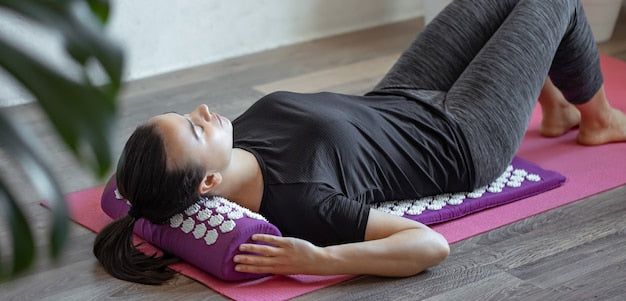
Benefits of Using an Acupressure Mat for Anxiety
You might be wondering why people use acupressure mats covered in plastic dots so often, what it does, what it is, and what it helps, read more to find out. What is an acupressure mat and how do they work? Acupressure mats, also known as needle simulation pad, is a mat made with plastic nubs that one lays on. It is meant to apply pressure on various points of the body in comparison to acupuncture which uses needles on various points of the body. Acupressure mats work by stimulating pressure points near the body’s meridian, the energy pathways that flow through the body, to balance the body’s energy flow. Acupressure mats are known to relieve pain, relieve anxiety, and promote better sleep. How to Use an Acupressure Mat: Lay on the mat for 20-40 minutes every day. Find the right level of sensation with you by starting off with a thin t-shirt or towel. Find “the” position and relax. Remember to breathe. After you’re done with your mat time, make sure to drink water after because toxins are starting to break down right away! How an Acupressure Mat Helps Anxiety: Reduces tension in the mind and body: Acupressure mats stimulate the areas and knots in the muscle fibres that affect tension. Releases Oxytocin and Endorphins: These natural hormones help relax the fibres and control metabolism, essentially generating wellbeing in the body. Calms one's thoughts and mind down: The time on the mat, just 20-40 minutes, makes you relax and keep your mind focused solely on exercise, calming your body and mind down. Treats and reduces headaches: Headaches are common in daily life, and are caused by neck and shoulder contractures. Laying on the mat, you help those muscles relax and reduce the headache. Distributes and balances energy in the right areas: The mat distributes and balances energy by pressing different pressure points in your body, not concentrating on only one pressure point, further helping to relax the body. Creating a daily habit of using this mat is healthy: Using this mat daily allows you to take care of your mind and body and avoids any muscular ailments because of stress and anxiety. Acupressure is similar to yoga and pilates: Using the mat maximises the effectiveness of yoga and pilates and using all of these reduces anxiety levels and promotes better sleep and moods. After understanding how an acupressure mat works and the benefits of it, you probably want to buy one! Here are the acupressure mats we recommend! - Yogi Bare Acupressure Set - Black - Yogi Bare Acupressure Set - Grey If you are not looking for an acupressure set, rather just the mat, we also have that! - Yogi Bare Acupressure Mat - Black
Mehr lesen
Best Supplements For Gut Health
Mehr lesen
What Are Cold Plunges And Why Are They So Popular?
Mehr lesen
Take The Test: Do I Need Electrolytes?
Ever wonder why you feel depleted despite staying hydrated after a workout or a day at work? You might need to check your electrolyte balance. We’ve formulated this helpful self-test so you know where you stand with your electrolytes. Why? Because electrolytes are essential for maintaining many processes in the body. It's an area of nutrition not to be overlooked, especially if you are regularly physically active. On an active day, even non-athletes can lose up to 11% of their total electrolytes through sweat. Don’t wait until you feel the effects of an imbalance – learn if you might need extra electrolytes by taking our simple test, whether you consider yourself athletic or not. What are electrolytes, exactly? On a basic level, electrolytes like potassium, sodium, chloride, and magnesium are mineral salts that can conduct electricity when dissolved in water. Think of them like the body’s own secret agents helping with nerve signals, muscle action and hydration, whilst regulating pH levels. With popularity building beyond the fitness world, electrolytes are a favourite in the wellness community for many reasons. Sweating in a sauna leads to a substantial loss of fluids, restoring electrolytes can ensure proper distribution of fluids across different body tissues and cells. We also love the purity of filtered water , yet it often has a lower mineral content, making electrolyte supplementation a great choice for filter users. The list goes on, so how will you score in our test? Take the test: Do I need electrolytes Question 1: Do you feel thirsty even if you’re drinking adequate amounts of water? (1/6) Yes / No Yes: Please consider electrolyte supplementation Since one of the main functions of electrolytes is to help your body retain and maintain hydration , without them you may notice thirst no matter how much you drink. For this reason, unexplained thirst may indicate an electrolyte imbalance. Question 2: Do you suffer from cramps or twitches? (2/6) Yes / No Yes: Please consider electrolyte supplementation Minerals including potassium, calcium and magnesium are essential for muscle contraction and proper muscle functioning. Therefore, muscle cramps and twitches are common signs of electrolyte deficiencies. Question 3: Do you exercise more than three times per week? (3/6) Yes / No Yes: Please consider electrolyte supplementation If you exercise regularly, especially in hot conditions, you might need electrolyte replenishment . Athletes can lose up to 12% of their body weight through sweat, drastically affecting performance and electrolyte balance. See Product See Product See Product See Product Question 4: Do you sweat or use a sauna more than once a week? (4/6) Yes / No Yes: Please consider electrolyte supplementation If you sweat a lot due to regular workouts or sauna use, you may need to watch out for electrolyte depletion. Studies have shown those working in hot climates , along with sauna users, are at a higher risk of imbalanced electrolytes. Question 5: Do you filter your tap water? (5/6) Yes / No Yes: Please consider electrolyte supplementation Using a water filter is a great way to reduce toxins entering your body, yet it has its downfalls as it strips away essential minerals in tap water. Luckily, this can be rectified with electrolyte supplementation. Question 6: Do you drink alcohol? (6/6) Yes / No Yes: Please consider electrolyte supplementation It’s no secret that alcohol consumption leads to dehydration, it also leads to electrolyte losses, particularly of potassium and magnesium. If you like to drink on a regular basis, you should consider the use of electrolyte supplements to counterbalance these losses The long-term benefits of hydration Read more Our healf Certified Green Powders of 2023 Read more window.sliderConfig1721234788548 = function() { var numberSlides = document.querySelectorAll(".bggle--slider-blog[section-id='1721234788548'] .bggle_blog-post-container"); if (numberSlides.length > 0) { window.slider1721234788548 = tns({ container: '.bggle--slider-blog[section-id="1721234788548"]', items: 1, slideBy: 'page', autoplay: true, gutter: 20, navAsThumbnails: false, navPosition: "bottom", arrowKeys: true, autoplayButton: false, autoplayButtonOutput: false, mouseDrag: true, autoplay: false, responsive: { 768: { items: 2 }, 1025: { items: 2 } } }); } }; document.addEventListener('init-slider-1721234788548', window.sliderConfig1721234788548) What the experts are saying Our nutritionist explains why supplementation of electrolytes is sometimes necessary and more effective than food intake: “Supplementation can provide a more controlled and concentrated dose of electrolytes, which is especially important in cases of intense physical activity, illness, or dietary restriction. Superfoods, like some types of seaweed , are high in electrolyte minerals. And while they may not bring about the same results, they are also worth a try as they come with many other health benefits...” “Consider having some electrolyte solutions or sports drinks before and during your workout. They can really make a difference by preventing low blood sugar, keeping you well-hydrated and replacing lost minerals”. The Takeaways Remember, your health journey is as individual as you are and electrolytes like sodium, potassium, magnesium, and calcium really can up the tempo when it comes to keeping our bodies in top shape. We love magnesium , for example, because it's a multitasking hero, involved in over 300 enzymatic reactions and is even being linked to helping with conditions such as hypertension and diabetes. Ever-increasingly, new studies are uncovering just how relevant these electrolytes are for the health of our cells and in keeping chronic illnesses like cardiovascular disease at bay. Watch this space! ••• EXPLORE ELECTROLYTES This article is for informational purposes only, even if and regardless of whether it features the advice of physicians and medical practitioners. This article is not, nor is it intended to be, a substitute for professional medical advice, diagnosis, or treatment and should never be relied upon for specific medical advice. The views expressed in this article are the views of the expert and do not necessarily represent the views of Healf
Mehr lesen